Thursday, February 28, 2013

Let us learn from the failures of the New Deal

My brother Jon, who is almost six years younger than I, remarked that he has never found anyone who remembers making mattresses near the end of the New Deal.  I remember it although I was involved only on a Saturday since I was in school.  He remembers working under the table on which the mattress lay, pulling the needle through and pushing it back.  It was less a problem for children than for adults, who would be in an awkward and stressful posture under the table.

I remember agreeing that making mattresses for the home was a better use of cotton than plowing it under.  As a boy I was angry at seeing a field of cotton, white and ready to be picked, plowed under.  The stated purpose was to reduce the supply of cotton and thus raise the price, all while people had few clothes to wear.  I was most disturbed at the killing of pregnant sows and the destruction of cows while people went hungry.

Looking back, we can see how wrong the New Deal was.  All of those alphabet organizations were based on making  products scarce, while the problem was not over-production but lack of demand from people who had no money for food or clothing.

How does that have meaning for us today?  The Obama administration is plunging ahead to force policies that are just opposite of what should be done to get the economy moving.  Obama has had more than four years now and the nation is suffering with nine million fewer people in the work force than were working when he took over. Unless we get a dramatic change, this nation is headed for catastrophe.


Wednesday, February 27, 2013

Treatment of servicemen has changed

Our church is planning a reception Sunday, March 10, to honor two members who are returning from active duty in Afghanistan. I support this fully while considering how differently we view our servicemen today than we did only a few years ago.

Some of us remember the demonstrations, some of then violent, and the cruel ways servicemen returning from Vietnam were treated.  At that time we utilized the draft to fill the ranks; today all men and women serving are doing so voluntarily.

War should never be popular (although Robert E. Lee said  "It is good war is so terrible. We would grow too fond of it.") but we should always support those who are fighting it.  I hope we never have another war that the entire nation support.  That would mean our own shores had been attacked.

My memory is of a young man, barely out of high school, who was visiting his uncle in Homer while on leave. The war in support of South Vietnam was less than a year old.  We had lots of conversations and he told of some terrible event, but he was convinced the action was right.  He planned to go back to Vietnam to serve again.   I thought of him often, wondering  how he fared.

Although many people question whether the attack on Iraq and its dictator was wise, they support the troups and through many organizations assist the wounded and help them re-enter civilian life.

A shameful waste of money

Louisiana continues the almost criminal waste of money by subsidizing film companies to make their crappy movies in the state. Through a program begun in 1992 and greatly expanded in 2002, the state has paid out over one billion dollars to film companies.  In addition the state has provided funds to entertainment groups.

The state issues tax credits and even pays 30 per cent of the cost of making a film. And the cost to the state has steadily increased, costing  179.5 million in 2011 and 26l million in 2012.  In defense of the giveaway, some call the program successful because the number of films made in the state has increased.  But what has been the economic benefit?  Very little, just a few temporary jobs.

A handful of wealthy people in Louisiana do benefit.  If a company can't use all its tax credits, it is allowed to sell them to other companies or to individuals. With $10,000 being the minimum for the credits, only the wealthiest can utilize the credits.

Other states have similar programs to entice movie makers, but nine, including Arkansas, are doing away with or suspending the programs.

We can understand teenagers being seduced by Hollywood and entertainment, but professionals and businessmen should act like competent adults. Is that too much to ask?  Probably so.

Monday, February 25, 2013

I don't miss fox hunting

I'm sure there are many things I've missed in my life, some that would have given me thrills like jumping out an airplane; others that would have given me both knowledge and pleasure, like world travel, but among the things I never did and never desired to do is fox hunting.

We had some neighbors who lived  about a quarter mile east of us who had a pack of mournful looking dogs who   had only one purpose -- fox hunting.  When I was a kid I would see these fox hunters drag by along with their dogs after a night  of hunting, but always without a fox.  I don't know if my dad ever went fox hunting -- it is very doubtful that he did since he wasn't a hunter -- but he explained fox hunting to me.

It had little resemblance to the pictures of  high society English men and women jumping fences as they and their dogs chased the fox.  No, our hunters would take their hounds to the woods, build a fire and wait while the dogs searched for the scent of the fox.  When one dog caught the scent, the other dogs would join and off they would go.  The hunters would sit around the fire drinking white lightning and listening to the dogs. One guy would say, "That's old Blue, he's in the lead."  Every hunter could identify the baying of his hound. That could go on all night until dawn.

I'm sure I've missed a lot in my life. Fox hunting is not among them.

Saturday, February 23, 2013

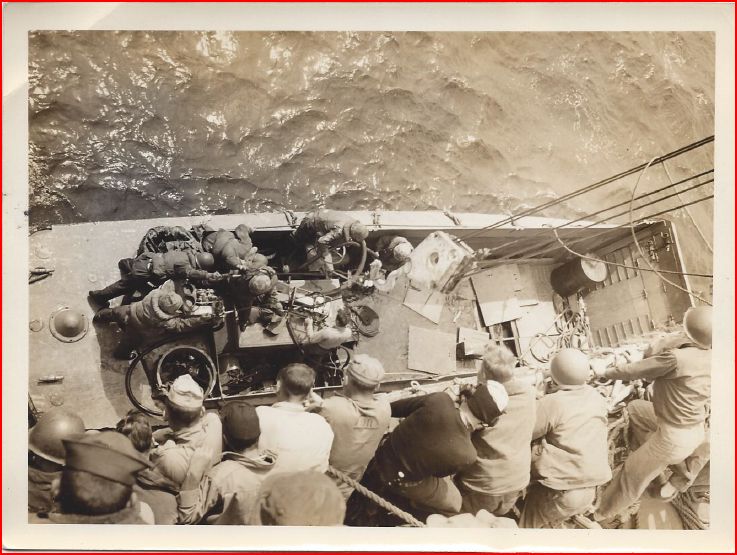
Iwo Jima will live in the hearts

"Iwo Jima will live in the hearts of all persons who were there. No others will ever know the torture that little island produced."

                             From the personal narrative of Mark White, Photographer  for
                             the USS Pickens, APA  190


War Pictures of the USS Pickens taken by Mark White, ship photographer


Yea! The flag is up on Mt. Suribachi

It was February 23, the fifth day of the battle for Iwo Jima.  Those of us at the debarkation station stayed busy supervising the loading of Marines and materiel into our boats.  Being out in the open, we could see the island and boats going and coming but we were not close enough to see the action.  We did know that the battle was not going well.


You can understand how elated we were when a seaman with binoculars yelled that the American flag had been raised on Mt. Suribachi.  We all clamored to see the flag and joined in the celebration.  Later though, we were depressed when we saw the flag had come down.  Then, only minutes later, the flag was flying again.

I don't know when we on the Pickens learned  what had happened.  Joe Rosenthal, who traveled to Iwo on our ship, took a picture  of the first flag raising which later became famous and known to everyone.  He also took a picture of the second flag raising which he thought was the one people were so excited about.  The sad thing is the Japanese re-took Mt. Suribachi in bloody battle, only to lose it to our Marines again.